First district, get ready: how is the Russian Design District organized and what does Vladimir Mashkov and Irina Viner-Usmanova have to do with it?
The trend towards decentralization is sweeping across the world. For those who have not yet been captured by it, we offer an expT
First district, get ready: how is the Russian Design District organized and what does Vladimir Mashkov and Irina Viner-Usmanova have to do with it?

The trend towards decentralization is sweeping across the world. For those who haven't been captured by it yet, we suggest exploring not the regions, but New Moscow. Specifically, the Vatutinki district. We'll tell you why you should visit it, and maybe even stay there for life.
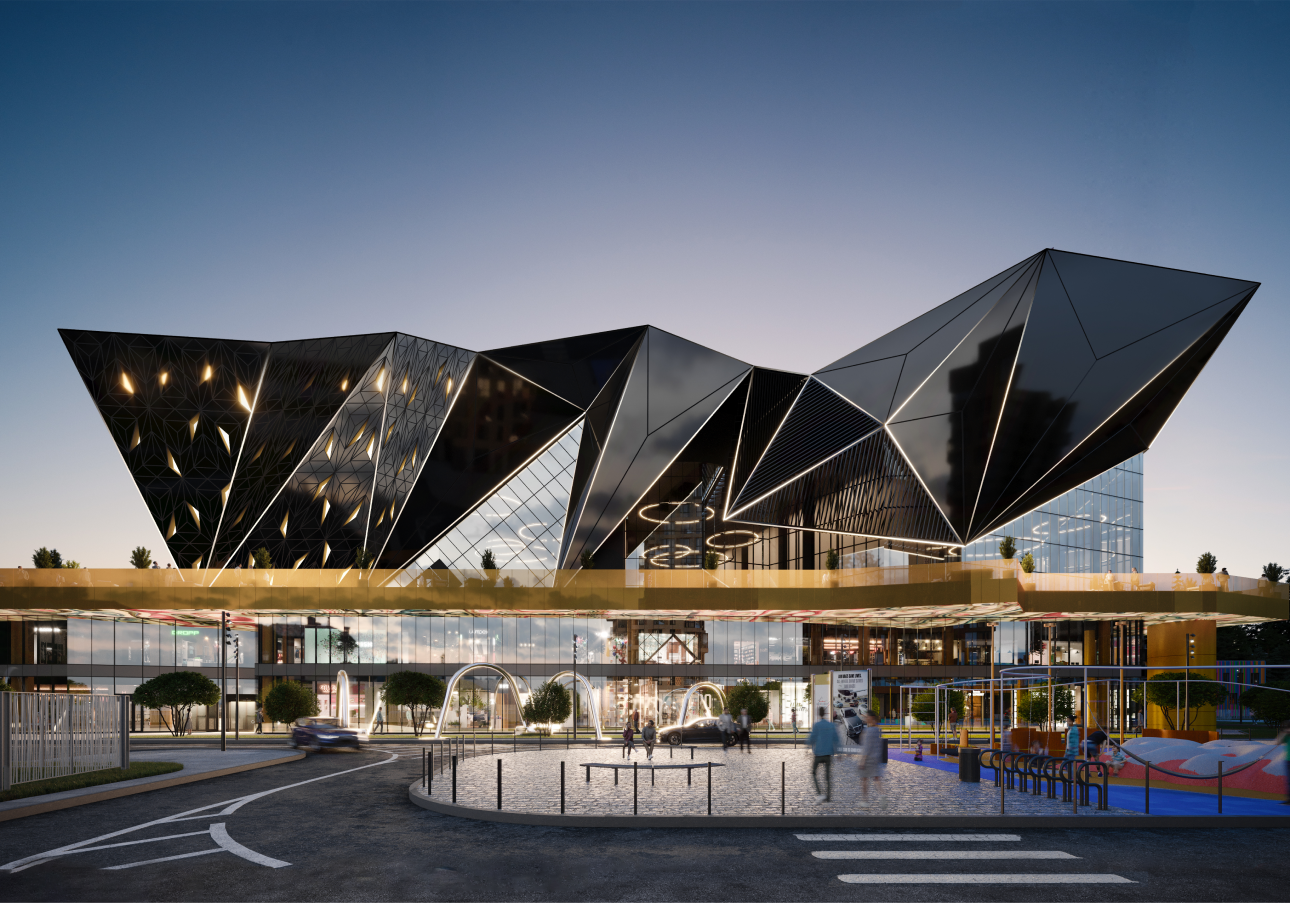

In the center of New Moscow, in one of the most creative districts, Vatutinki (this is how it happened historically: in 1952, the village of “Soviet Writer-2” was built here, where, according to legend, the poet Mikhail Matusovsky wrote “Moscow Nights”), he grew up Russian Design District , a cultural and educational cluster by the Rodina Group. This is not just the first interesting point on the local map, but also the first domestic embodiment of the popular district format in the world. For example, in Dubai in 2013 they built D3 — a residential complex with boutiques, restaurants, hotels, a park on the shore of the bay, a two-kilometer embankment, business centers and exhibition spaces, and craftsmen from Helsinki equipped their district with antique shops and creative institutes, including the Design Museum and the School of Design, as well as the house-museum of the famous Finnish designer and architect Alvar Aalto. In essence, districts are new ecosystems in which people live, study, work and enrich themselves culturally — an attractive alternative to typical urban areas with “panel houses” and U- and L-shaped “hives” with thousands of apartments.
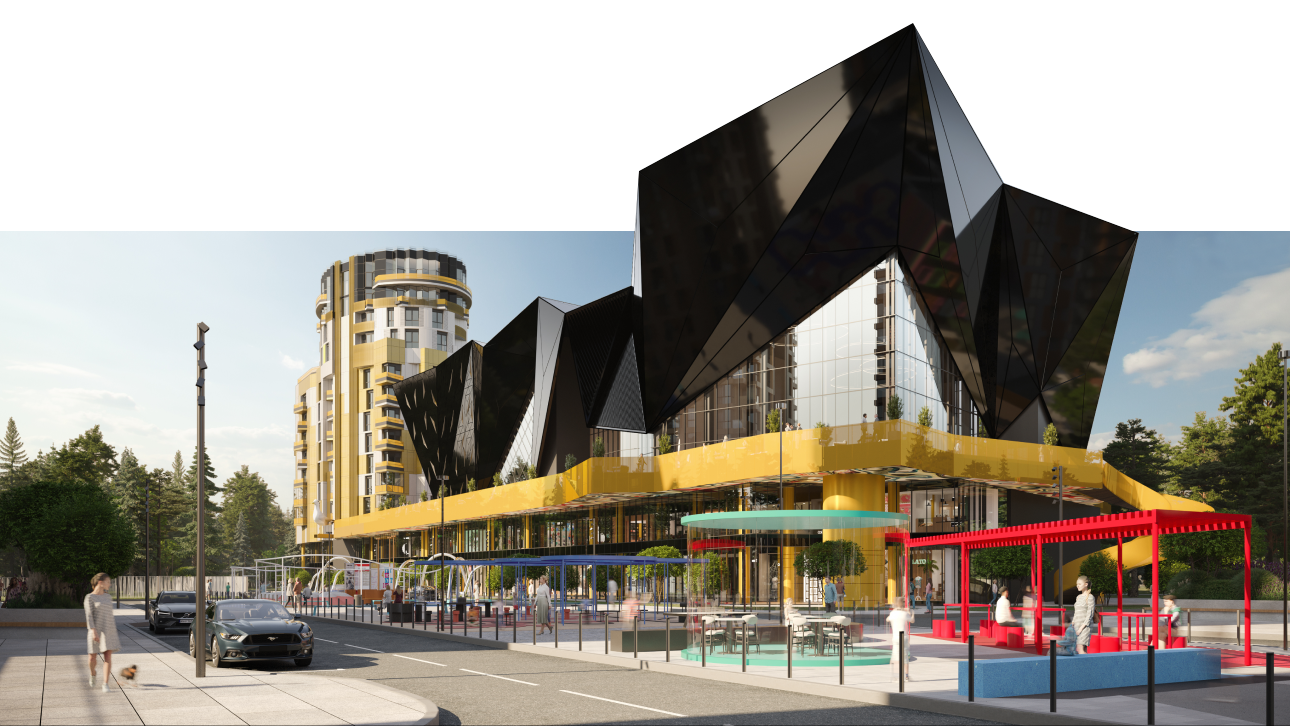
 The Russian district keeps up with its foreign predecessors and surprises — literally — from the very beginning. Firstly, it is a cluster that unites residential spaces (nine full-fledged towers) with educational ones (more on them later). Secondly, the main vein of the district is the Rodchenko art boulevard with an aquarium of shop and restaurant windows and a scattering of sports grounds and sculptures by the artist Dmitry Aske (by the way, the cover of the literary issue of Rules of Life is his work).
As for housing, the architecture and design of each of the nine towers was done by famous people. Thus, the head coach of the Russian Olympic rhythmic gymnastics team Irina Viner-Usmanova gave the house intended for the winners the features of smoothness and inflexibility inherent to gymnasts through the linear surface of the facades and spread oriental ornaments throughout the lobby and floors with apartments. The artistic director of the Moscow Oleg Tabakov Theater Vladimir Mashkov furnished his house, which will appeal to people in creative search, with mirrors, continuing the idea of the Tabakerka foyer - there they are called to reflect all facets of the world of people of art, and the artistic director of the Mariinsky Theater Valery Gergiev supplied the lobby with living plants, wooden trim (after all, most musical instruments are made of wood), added light and air due to panoramic windows and spread stage lighting throughout the floors.
![]() The apartments in all the towers are designed to be light and spacious, thanks to corner glazing and ceilings up to 4.2 meters high. Those who love non-standard design solutions can settle, for example, in apartments with semi-circular walls.
The apartments in all the towers are designed to be light and spacious, thanks to corner glazing and ceilings up to 4.2 meters high. Those who love non-standard design solutions can settle, for example, in apartments with semi-circular walls.
![]() But the district is certainly not limited to housing. Since successful, well-educated people had a hand in it, the quarter's infrastructure is conducive to education: on the territory there is a Design and Technology Art School (DATA), which will teach painting, contemporary design, artificial intelligence design, environmental design, communication design, game design, public art and many other disciplines. Also soon, the Valentin Yudashkin Fashion Academy, a kindergarten and a school with an early childhood development center will open in the cluster.
But the district is certainly not limited to housing. Since successful, well-educated people had a hand in it, the quarter's infrastructure is conducive to education: on the territory there is a Design and Technology Art School (DATA), which will teach painting, contemporary design, artificial intelligence design, environmental design, communication design, game design, public art and many other disciplines. Also soon, the Valentin Yudashkin Fashion Academy, a kindergarten and a school with an early childhood development center will open in the cluster.
![]() The sports and cultural functions have been fulfilled (by the way, the district will host street installations and exhibitions in local museum spaces), but what about the recreational ones? RDD advocates walking: the very same Rodchenko art boulevard is at your service, where family bakeries, cafes and designer boutiques are about to open.
The sports and cultural functions have been fulfilled (by the way, the district will host street installations and exhibitions in local museum spaces), but what about the recreational ones? RDD advocates walking: the very same Rodchenko art boulevard is at your service, where family bakeries, cafes and designer boutiques are about to open.
Industrial designer Vladimir Pirozhkov decided to convey the unity of man and nature by combining concrete and metal with woven decorative elements, and painted the walls with a pattern made using laser cutting technique. Remarkably, individual elements in the Pirozhkov Tower — mailboxes, reception desk — will be made to order.
You can choose an apartment in the chiseled house of the prima ballerina of the Bolshoi Theatre Svetlana Zakharova, and in the towers of designers Igor Chapurin, Vika Gazinskaya and Valentin Yudashkin. The latter, by the way, turned the house into a couturier's workshop, furnishing the space with mirrors and supplying it with white satin fabric with gold elements, reminiscent of a wedding dress.
 The apartments in all the towers are designed to be light and spacious, thanks to corner glazing and ceilings up to 4.2 meters high. Those who love non-standard design solutions can settle, for example, in apartments with semi-circular walls.
 But the district is certainly not limited to housing. Since successful, well-educated people had a hand in it, the quarter's infrastructure is conducive to education: on the territory there is a Design and Technology Art School (DATA), which will teach painting, contemporary design, artificial intelligence design, environmental design, communication design, game design, public art and many other disciplines. Also soon, the Valentin Yudashkin Fashion Academy, a kindergarten and a school with an early childhood development center will open in the cluster.
The Rodina Group paid special attention to physical education. The third in the Moscow region Irina Viner-Usmanova Rhythmic Gymnastics Center, yoga and dance schools and the Fight Nights Global martial arts school, led by Kamil Gadzhiev (master of sports in jiu-jitsu and sambo, president of the international organization Fight Nights Global, known for spectacular mixed martial arts fights), are about to open here. If you dream of putting your enemies on their shoulder blades like Khabib Nurmagomedov, sign up for his demonstration training (yes, there are plenty of stars - both current and big - in the sports segment of the region). Future Josh Taylors were provided with championship conditions: a huge training hall with several rings, modern exercise machines, areas for practicing fighting techniques and a fitness zone. And workout fans will find volleyball courts, running tracks and pump tracks.
 The sports and cultural functions have been fulfilled (by the way, the district will host street installations and exhibitions in local museum spaces), but what about the recreational ones? RDD advocates walking: the very same Rodchenko art boulevard is at your service, where family bakeries, cafes and designer boutiques are about to open.
While the walls of the Russian Design District, designed by A-list stars, are waiting for new stars (of design, science, art or sports), the authors of the project themselves shine and receive awards - for example, last year the project won the Urban Awards 2020 in the category "Best Residential Complex of New Moscow". Also, the residential cluster of the Russian Design District from the Rodina Group was recognized as the No. 1 design object at the "Real Estate Market Records 2020" award. Isn't a cluster with such a title worth, if not moving into an apartment, then at least looking into the lobby of Irina Viner-Usmanova's building or signing up for training with famous athletes?